Start With the Warranty Document
The first question to ask your contractor is simple:
“Can I see the warranty documentation?”
Don’t rely on a verbal promise or simply the number of years being advertised. Ask for the actual document and take the time to read it.
Look beyond the impressive looking pages and find out:
- What does the warranty actually cover?
- What are the exclusions?
- Who provides the warranty?
- Where is the manufacturer based?
- Who do you have recourse with if something goes wrong?
A 20-year warranty only has value if you understand what those 20 years actually protect you against.
Who Stands Behind the Warranty?
Find out whether the warranty comes from the contractor who installs the floor or from the manufacturer or supplier of the products.
This distinction matters because you want to know who is ultimately standing behind the flooring system.
It’s also worth asking where the products are manufactured. If something goes wrong, understanding who is responsible and what recourse you have can help you make a more informed decision.
The Fatal 5: Five Things to Look For
There are five important areas homeowners should consider when looking at epoxy flooring warranties. These are the problems that can potentially arise when the wrong flooring system is selected.
1. Delamination
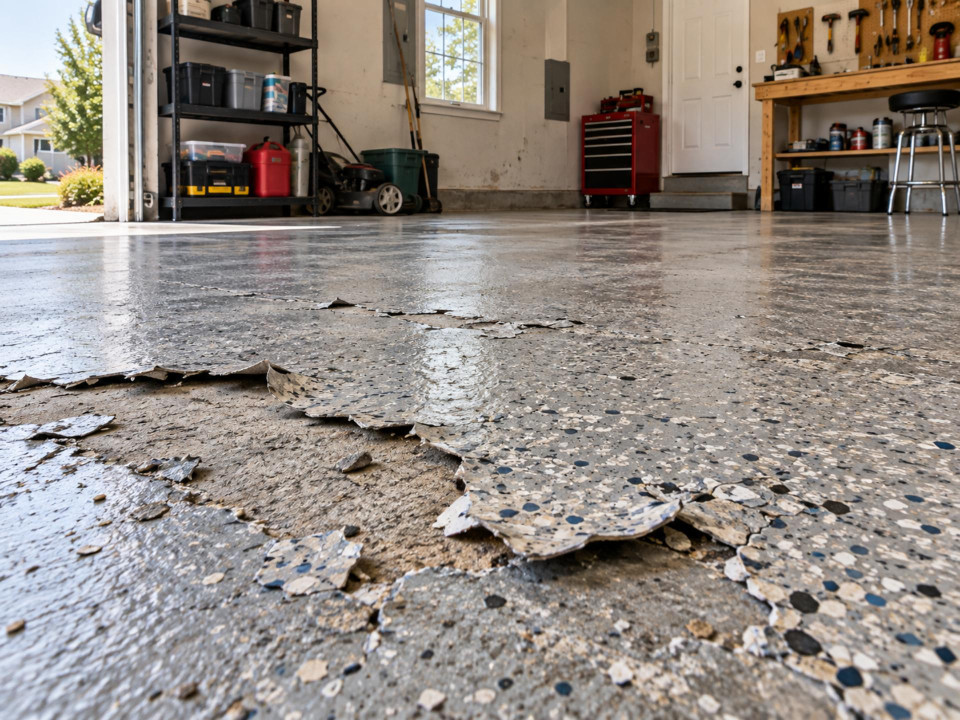
Delamination is when the epoxy coating loses its bond with the concrete underneath. In some cases, the coating can literally peel away from the concrete.
This is one of the most common things covered by epoxy flooring warranties.
But don’t stop at “delamination is covered.”
Find out whether the warranty protects you against the other problems that can affect your floor.
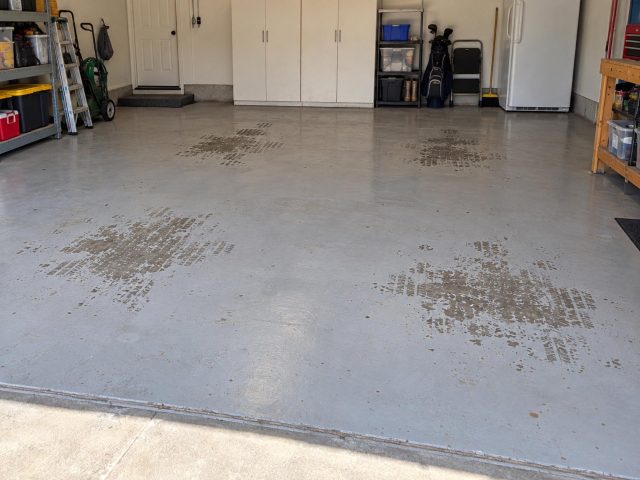
2. Hot Tyre Pickup
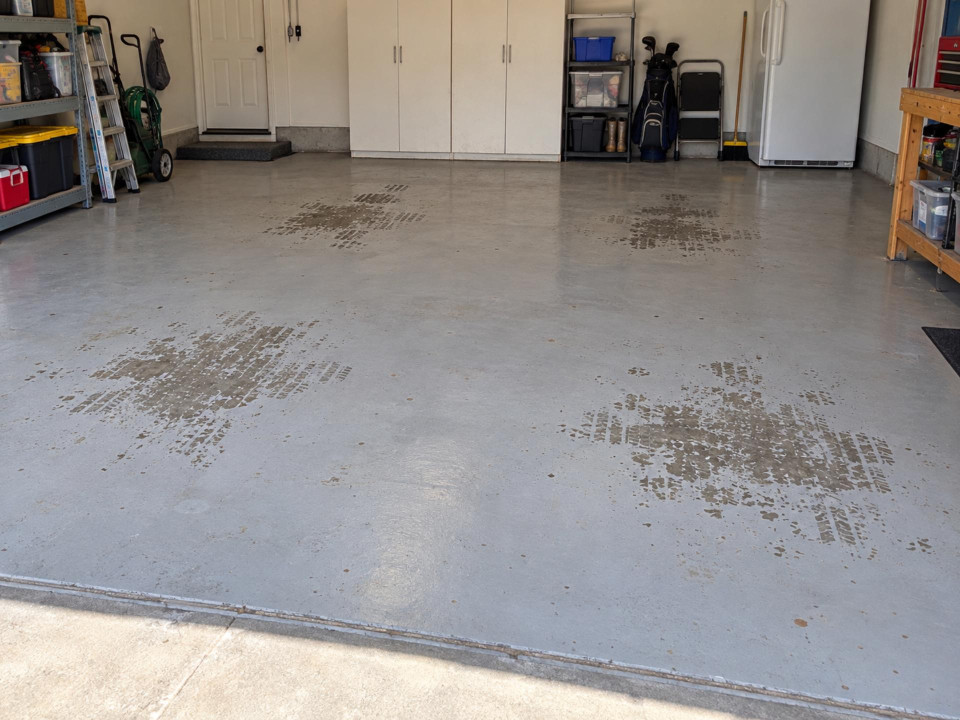
Hot tyre pickup occurs when a coating comes away from the concrete underneath a vehicle tyre.
This can be a major concern for garage floors, where tyres can generate significant heat and pressure against the coating.
If you’re having an epoxy floor installed in your garage, ask:
“Does the warranty cover hot tyre pickup?”
Don’t assume that it does.
3. UV Stability
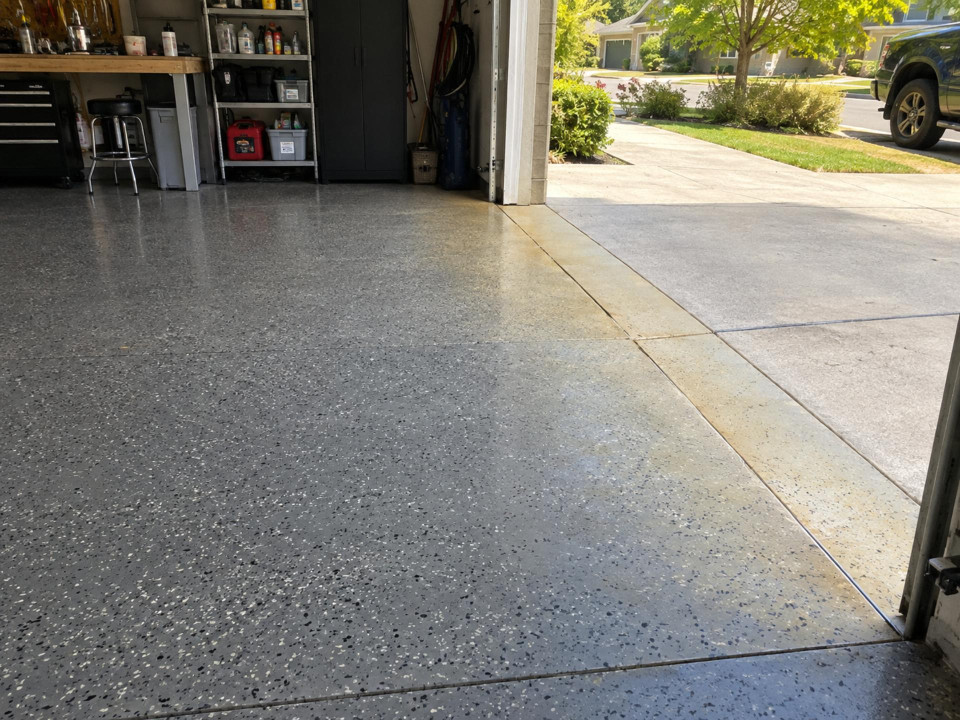
Epoxy flooring can also be affected by exposure to sunlight.
UV instability can cause the colour of an epoxy or topcoat to change over time.
You may initially have a beautiful new floor, only to notice that its appearance begins to change after prolonged exposure to sunlight.
Ask:
“Is the system UV stable?”
And:
“Does the warranty cover colour change caused by UV exposure?”
The flooring system needs to be appropriate for the environment where it will be installed.
4. Slip Rating
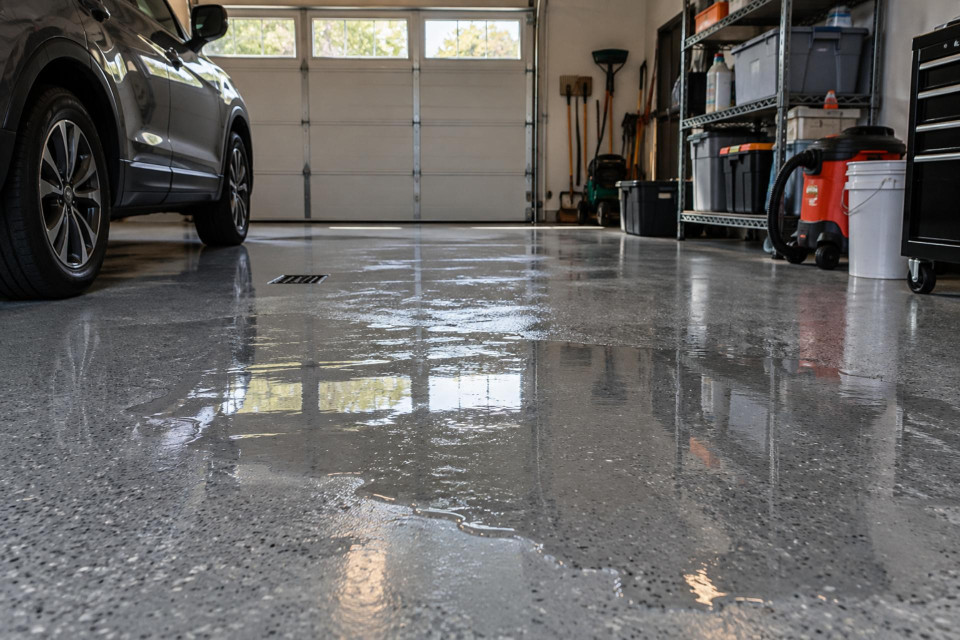
Another important consideration is slip resistance.
Epoxy can become slippery when wet, which means the flooring system needs to be appropriately treated where slip resistance is important.
Some products are available with certified slip ratings.
Ask your contractor:
“Does this product have a certified slip rating?”
It’s a simple question that can give you greater peace of mind about the flooring system you’re choosing.
5. Toxicity and Safety
Finally, ask what type of flooring system you are having installed and whether it is suitable for the environment.
Some epoxy and flooring systems are solvent-based.
As solvents evaporate during the curing process, they can produce strong fumes and noticeable odours. If the flooring is being installed in or around your home, ask:
- What type of system is being used?
- Is it solvent-based?
- What fumes are produced during installation?
- What ventilation is required?
- Is the finished system suitable for the intended environment?
Understanding the products being installed in your home is an important part of making an informed decision.
Warranty Length Isn’t the Whole Story
Warranties in the epoxy flooring industry can range from around 12 months through to lifetime warranties, depending on the system and products being offered.
There can also be a significant difference between lower cost and higher quality flooring systems. A longer warranty may sound better, but the number itself doesn’t tell you everything. What matters is the coverage behind that number.
A 20-year warranty could sound impressive, but if it only covers delamination while excluding other problems you’re concerned about, you need to know that before making your investment.
Do Your Homework Before You Choose Your Epoxy Floor
Your garage floor is an investment, and the warranty should form part of your decision making process. Before choosing a contractor, ask to see the warranty documentation and read it carefully.
Then make sure you understand:
- What is covered?
- What isn’t covered?
- Who provides the warranty?
- Who is responsible if something goes wrong?
The right questions can help you compare flooring systems based on more than just price or a headline warranty period.
Don’t just ask… “How long is the warranty?”
Ask….
“What does the warranty actually cover?”